
Expert Treatment for Hernia by Dr. Yaswanth Tummala | Vijayawada

Get expert treatment for hernia
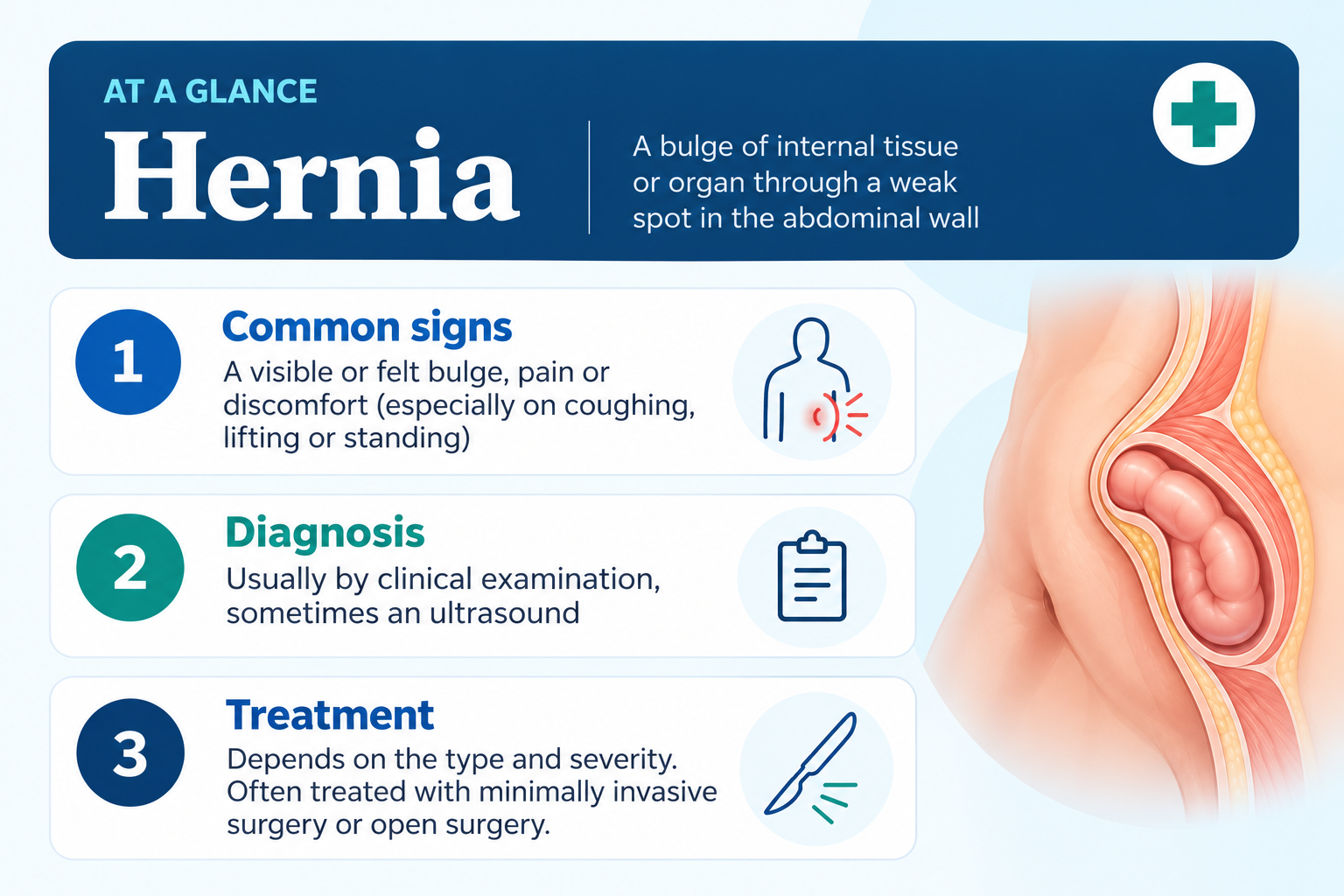
A hernia happens when an organ or fatty tissue pushes through a weak area in the muscle wall of the abdomen. Common types include inguinal (groin), umbilical (near the navel) and incisional (through an old surgical scar) hernias.
Medically reviewed by Dr Yaswanth Tummala, updated Oct 2026
Symptoms
- A bulge that may disappear when you lie down
- Discomfort or aching, especially when lifting, coughing or bending
- A heavy or dragging feeling in the groin
When should you see a doctor?
Seek urgent care if the bulge becomes painful, hard, red or cannot be pushed back, especially with vomiting. This may mean the hernia is strangulated, which is an emergency.
Surgical treatment
- Open mesh repair
- Laparoscopic (keyhole) repair: TEP or TAPP techniques
Benefits
- Laparoscopic repair uses small cuts, often with less pain
- Both sides can be repaired at the same time if needed
- Faster return to work for many patients
Recovery
Most patients walk the same day and return to light work in about a week. Heavy lifting is usually avoided for 4 to 6 weeks.
- Day 1Walking the same day; go home within 24 hours
- Week 1Return to desk work and gentle walks
- Week 2Driving when you can brake comfortably
- Weeks 4–6Resume lifting and exercise
Typical recovery. Your own timeline depends on your health and the procedure chosen.

Discuss your treatment with Dr Yaswanth Tummala
Every patient is different. A consultation is the best way to understand your condition and the options that suit you.