
🚨Can Hyalase dissolve Grade 4 Piles Let’s clear up the myth! 🩺👇| Dr. Tummala Yaswanth
Expert Treatment for Piles (Haemorrhoids) by Dr. Yaswanth Tummala | Vijayawada

Piles Specialist in Vijayawada | Minimally Invasive & Laser Surgery
Piles, also called haemorrhoids, are swollen blood vessels in the lower rectum and anus. They are very common, particularly in people who strain during bowel movements, are pregnant, or sit for long periods.
Medically reviewed by Dr Yaswanth Tummala, updated Oct 2026
Procedure time20–40 minutes
Hospital stayUsually same day
Back to desk work2–5 days
AnaesthesiaSpinal or general
What is Piles (Haemorrhoids)?
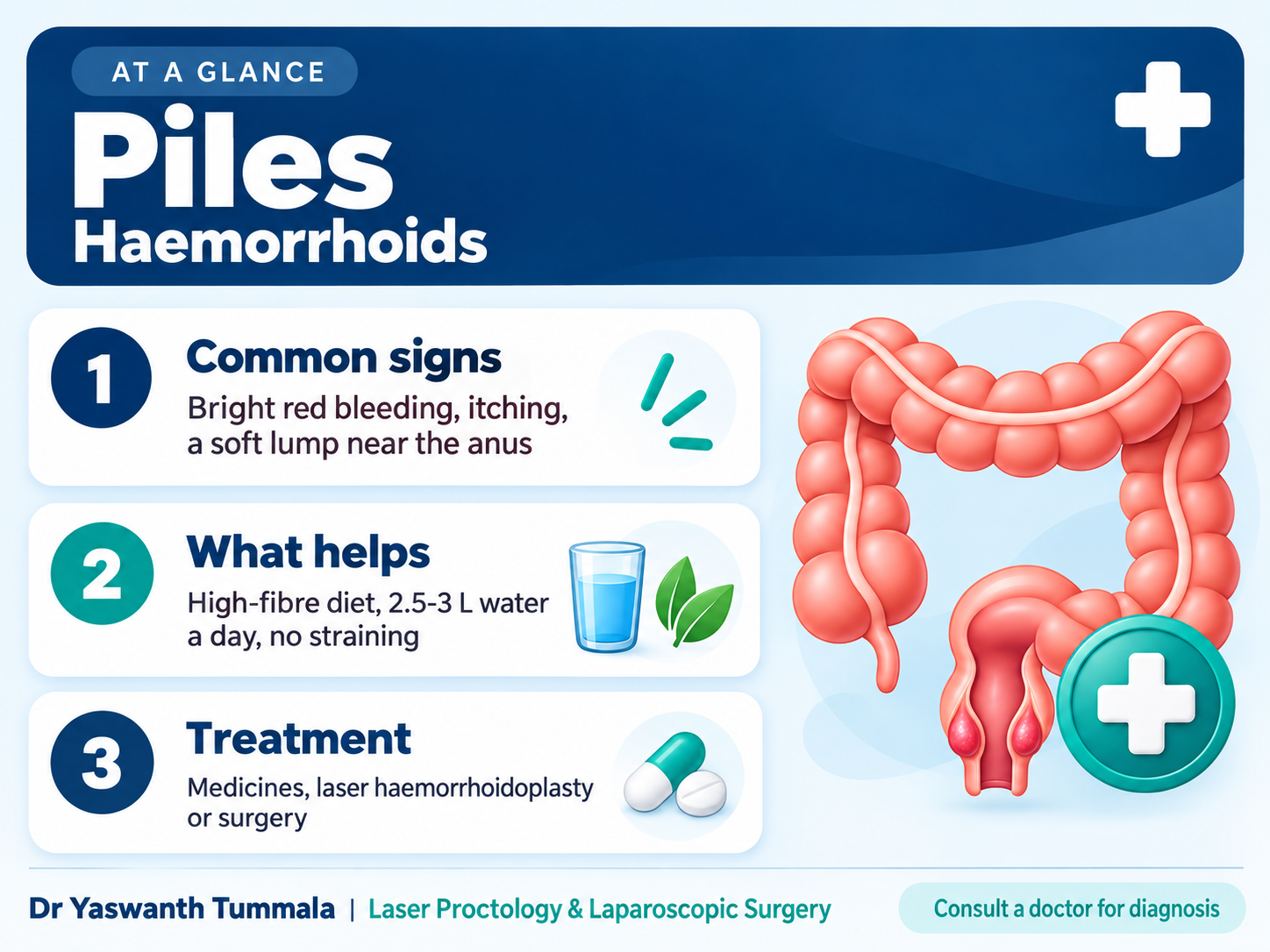
Piles (haemorrhoids) are swollen, enlarged blood vessels in the lower rectum and anus. Everyone has soft cushions of tissue and blood vessels in this area that help with stool control. When these cushions become swollen or stretched, they cause symptoms and are called piles.
Symptoms
- Bright red blood on toilet paper or in the toilet after passing stool
- A lump near the anus that may go back inside on its own or need to be pushed back
- Itching or irritation around the anus
- Discomfort or pain while sitting
- A feeling of incomplete emptying after a bowel movement
Causes
- Long-standing constipation and straining
- Low-fibre diet and not drinking enough water
- Prolonged sitting, including on the toilet
- Pregnancy
- Heavy lifting
Risk factors
- Age above 45
- Being overweight
- A family history of piles
- Chronic diarrhoea
Diagnosis
Diagnosis is usually made by a gentle physical examination in the clinic. The doctor may use a small instrument called a proctoscope to look inside the anal canal. If you are older or have other symptoms, a colonoscopy may be advised to rule out other causes of bleeding.
When should you see a doctor?
See a doctor if you notice bleeding from the back passage, if a lump does not go back inside, or if symptoms last more than a week despite home care. Seek urgent care for heavy bleeding, dizziness, or severe pain.
Rectal bleeding has several possible causes, so it should always be checked rather than assumed to be piles.
Your treatment options
Treatment depends on the grade of piles and how much they affect daily life. Early piles often settle with lifestyle changes. Larger or persistent piles may need a clinic procedure or surgery.
Non-surgical treatment
- A high-fibre diet with fruit, vegetables and whole grains
- Drinking 2.5 to 3 litres of water a day unless advised otherwise
- Stool softeners and medicines to reduce swelling
- Warm sitz baths for 10 to 15 minutes, two or three times a day
- Avoiding straining and long periods on the toilet
Surgical treatment
For large or prolapsing piles, options include haemorrhoidectomy (removal of the piles) and stapler haemorrhoidopexy, which lifts the piles back into place.
Ask if this suits youLaser and minimally invasive treatment
Laser haemorrhoidoplasty uses laser energy to shrink the piles from inside. There are no large cuts, so there is usually less pain and bleeding, and many patients go home the same day.
Ask if this suits youBenefits
- Relief from bleeding and discomfort
- Minimally invasive options with shorter recovery
- Most patients return to desk work within a few days
Recovery
After laser treatment most people resume normal activity within 2 to 5 days. After conventional surgery, recovery usually takes 2 to 3 weeks. Keeping stools soft is the most important part of recovery.
- Day 1Walk around, start a soft high-fibre diet, take medicines as prescribed
- Days 2–5Mild discomfort settles; warm sitz baths help
- Week 1Most people return to desk work
- Weeks 3–4Healing is usually complete; continue the fibre-rich diet
Typical recovery. Your own timeline depends on your health and the procedure chosen.
Potential risks
As with any procedure, there can be pain, bleeding, infection, temporary difficulty passing urine, or recurrence. Your doctor will explain the risks that apply to you.
Prevention
- Eat enough fibre every day
- Drink plenty of water
- Go to the toilet when you feel the urge and do not strain
- Stay active and avoid sitting for long periods
Patient stories, videos & articles
Watch & learn
"Piles & Anal Pain in Children? Yes, It's Real." | Dr. Tummala Yaswanth | Vijayawada
Frequently asked questions about Piles (Haemorrhoids)
Can piles go away without surgery?
Yes. Many early-stage piles improve with a high-fibre diet, enough water, medicines and avoiding straining. Surgery or laser treatment is considered when symptoms persist.
Will piles come back after laser treatment?
Recurrence is possible after any treatment, but it is less likely if you keep stools soft and avoid straining.
How long does laser piles treatment take?
The procedure itself usually takes 20 to 40 minutes, and most patients go home the same day.

Discuss your treatment with Dr Yaswanth Tummala
Every patient is different. A consultation is the best way to understand your condition and the options that suit you.